
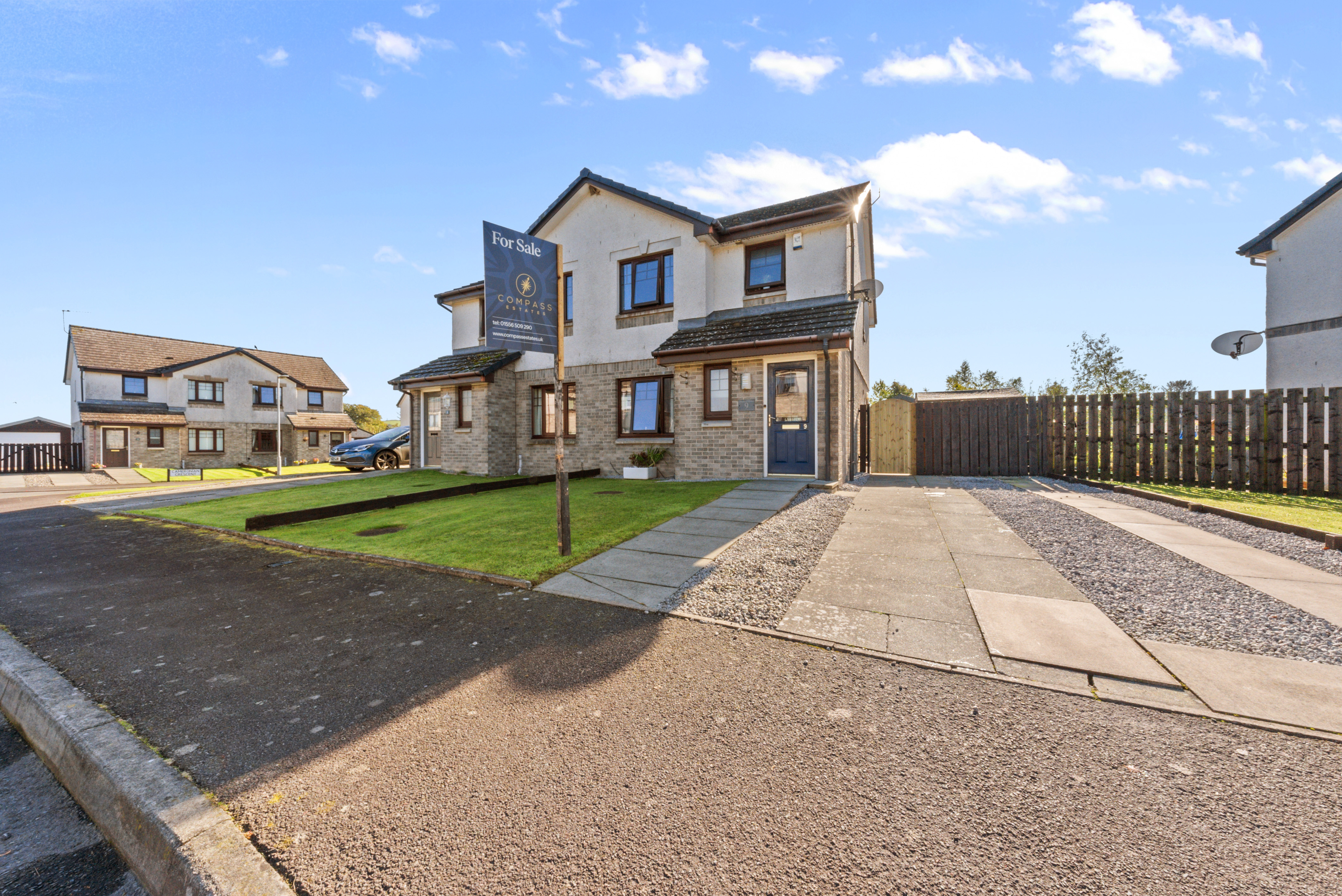
Big news for anyone trying to get onto the property ladder in Scotland. The Scottish Government has announced the First Homes Fund: a scheme that gives first-time buyers up to £10,000 towards their deposit, completely interest-free. It opens by the end of June 2026, and if you've been struggling to save enough to buy, this could be exactly the help you've been waiting for.
I want to cut through the noise and explain clearly what this scheme actually is, what it isn't, and what you should be doing right now if you want to take advantage of it in Dumfries & Galloway.
What is the First Homes Fund?
The First Homes Fund is a shared equity scheme. The Scottish Government contributes up to £10,000 towards your deposit, and in return takes a proportional equity stake in your home. You hold full title to the property. It's yours. When you eventually sell, the government's share is repaid at that point.
Crucially, there are no monthly repayments and no interest charged on the government's contribution. It's not a loan in the traditional sense. It's more like a silent financial partner who helps you get in the door and gets their money back when you leave.
No monthly repayments. No interest. The government takes its share back when you sell, and not before.
Who qualifies?
Eligibility is relatively broad. To qualify you need to:
- Be a genuine first-time buyer: you must not currently own, or have previously owned, a property anywhere in the world
- Be purchasing with a mortgage (cash purchases don't qualify)
- Be buying a property valued at £300,000 or under
- Be buying in Scotland (new build or existing property)
The £300,000 ceiling covers the vast majority of properties in Dumfries & Galloway, a very workable limit for this area. Whether you're looking at a flat in Dumfries town, a cottage in the Stewartry, or a semi in Castle Douglas, you're likely well within that threshold.
What does it mean in practice?
Let's put some numbers on it. If you're buying a £180,000 property and have saved £9,000 (a 5% deposit), the £10,000 from the government takes your total deposit to £19,000, just over 10%. That means a smaller mortgage, a better loan-to-value ratio, and almost certainly access to better mortgage rates.
For many buyers in Dumfries & Galloway, the gap between "almost there" and "actually able to buy" is exactly this kind of sum. A £10,000 boost at the right moment can be the difference between renting for another two years or owning by the end of 2026.
What's the catch?
It's a fair question. The government does take an equity share, which means if your property goes up in value, you repay a slightly larger amount when you sell. For example, if the government contributes 5% of the purchase price and you sell five years later for £30,000 more than you paid, you'd repay 5% of the sale price rather than 5% of what you originally paid.
That's a reasonable trade-off. You get into the market sooner, your own equity grows on a larger asset, and the government recoups its share proportionally. Most first-time buyers who run the numbers find this works in their favour. Getting onto the ladder five years earlier almost always outweighs the equity share on exit.
How does this work in the Scottish buying process?
This is where it's worth being clear about how Scottish conveyancing works, because it's different from England. In Scotland, once your offer is accepted and missives are concluded, the sale is legally binding. There's no gazumping, and no falling through at the last minute.
To use the First Homes Fund, you'll need to have the scheme confirmed before you make your offer. That means getting your mortgage agreed in principle, understanding exactly how much the government contribution will be, and making sure your solicitor is aware of the shared equity arrangement ahead of the offer stage. Your solicitor will register the equity stake with the Registers of Scotland as part of the title process.
It's not complicated, but it does require a bit of preparation. Speaking to a mortgage adviser who knows the Scottish market is an important first step.
What should you do right now?
The scheme opens at the end of June, but the groundwork starts now. Here's what I'd suggest:
- Get a mortgage agreement in principle. Most lenders will want to know the full picture including any government equity contribution, so speak to an independent mortgage adviser who understands shared equity.
- Speak to a Scottish solicitor early. In Scotland, you appoint a solicitor before you make offers, not after. Get this in place before you start viewing.
- Know your budget. With the £10,000 contribution, reassess what you can realistically buy. You may find your options are better than you thought.
- Start your search. Dumfries & Galloway has strong value compared to central Scotland. Properties that would cost £250,000+ in Edinburgh can often be found here for £150,000–£180,000.
The scheme opens at the end of June. Buyers who prepare now will be best placed to move quickly.
Finding a mortgage adviser who genuinely understands shared equity schemes and the Scottish market makes a real difference at this stage. If you'd like an introduction to a reliable, independent broker I work with regularly in Dumfries & Galloway, get in touch and I'll connect you directly.
A note for sellers in Dumfries & Galloway
This matters for you too. More first-time buyers in the market means more demand at the lower end of the market, typically properties under £200,000. If you're selling a family home and need a first-time buyer further down the chain, this scheme strengthens their position. Chains that previously stalled because of deposit shortfalls are more likely to complete.
If you've been holding off listing because you weren't sure the market had buyers, the launch of the First Homes Fund is a good reason to revisit that thinking.
Thinking about selling in Dumfries & Galloway?
More buyers in the market means more competition for your home. Find out what yours is worth with a free, no-obligation valuation.
Get a free valuation