
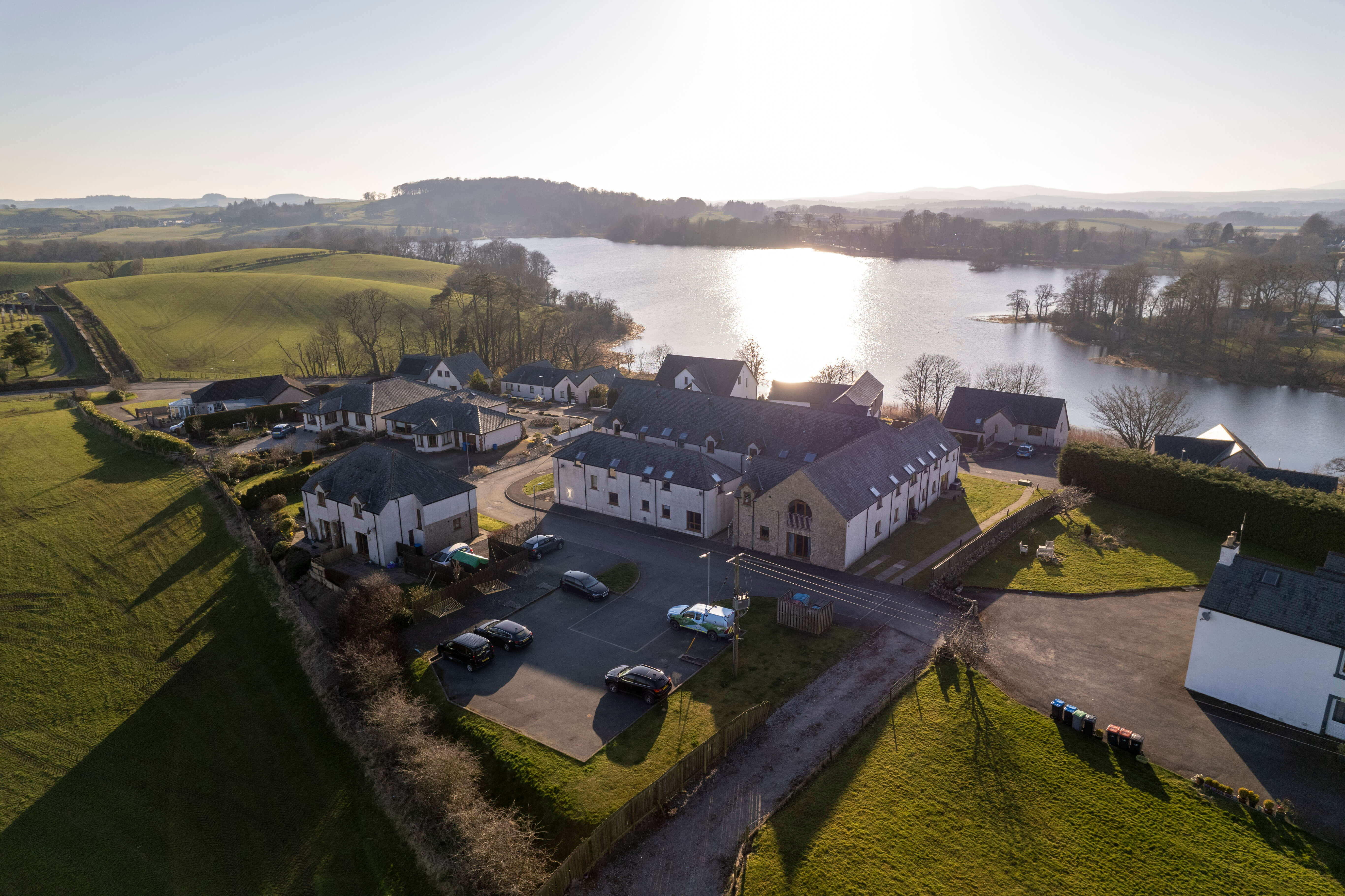
Most homes are bought for what is inside the walls. Rural homes are bought for what is outside them. The view down the glen, the field behind the steading, the length of the drive, the loch at the bottom of the garden. If the marketing does not show that, the buyer never gets as far as arranging a viewing.
That is the main reason I put drone footage on every instruction, and it matters most on rural properties in Dumfries & Galloway.
What a ground-level photograph cannot show
A good photographer can make a farmhouse kitchen look wonderful. What they cannot do from the ground is show the buyer where the house sits in relation to everything else. Buyers looking at rural property are asking a handful of questions before they ever pick up the phone:
- How much land comes with it, and where does it start and stop?
- How far is the nearest neighbour, and can I see them?
- What is the approach like, and is the track sensible in winter?
- Where are the outbuildings, and how do they relate to the house?
- What is the setting like: woodland, water, open hill, coast?
Aerial footage answers all five in about a minute. A buyer who watches it arrives at the viewing already knowing the layout, which means the viewing is spent on the things that decide a purchase rather than on orientation.
Photographs sell the viewing, video sells the setting
Stills still do the heavy lifting on Rightmove, where the first few images decide whether someone clicks through. For a rural property I lead with the strongest exterior image, usually an aerial one, because it tells the buyer straight away that this is not a standard house on a standard street. The interior photographs then confirm the quality of the accommodation.
The video does a different job. It lets someone in Edinburgh, Newcastle or further south get a feel for the place before they commit to a long drive. Plenty of rural buyers in this region are relocating, and they cannot pop round on a Tuesday evening. Good footage filters out the casual browsers and brings in the buyers who are serious enough to travel.
What drone footage cannot do
I want to be careful here, because this is where sellers sometimes expect too much. Footage shows the property. It does not define it. The boundaries in your title deeds are what count legally, and they may not match what a buyer assumes from the air. A fence line, a burn or a row of trees is not necessarily where the legal boundary runs.
So on any rural instruction I encourage you to check your title plan with your solicitor early, before the property is marketed. If part of the land you assume is yours is leased, shared or subject to a right of way, better to know now than in the middle of missives.
The rural checks a buyer's solicitor will make
Rural sales tend to attract more questions in the legal process than a house in town, because there is more to check. If you have the answers ready, you keep the sale moving. The usual areas are:
- Private water supply: who owns the source, who maintains it, and any shared arrangements with neighbours
- Private drainage: the type of system, its age, and whether a septic tank is properly registered
- Access: whether the road or track to the property is public or private, and who pays for maintenance
- Rights of way and servitudes: anyone else with a legal right to cross your land
- Outbuildings and extensions: building warrants and completion certificates for anything that was added
- Land and buildings included in the sale, set out clearly in the title
None of this is unusual, and none of it is a problem in itself. It becomes a problem when the seller has not looked at it until a solicitor's letter arrives. Gathering the paperwork before you list costs you an afternoon. Chasing it during a live sale can cost you weeks.
Pricing a rural home is a different exercise
Rural property does not price neatly off comparable sales in the next street, because there often is no next street. Two houses a mile apart can differ sharply once you allow for land, outbuildings, access, broadband and how private the setting is. That is why a desktop estimate will often miss on rural homes. I walk the property, look at the land and the outbuildings, and compare against sales that are truly similar rather than merely nearby.
Most rural homes are marketed at offers over, with the Home Report valuation as the reference point. If you want to see how that works in practice, I have explained how offers over pricing works in Scotland. Interest can be slower to build than it is for a town house, so the marketing needs to be strong from day one, and the asking price needs to reflect the true position rather than the hopeful one.
Timing and preparation
The setting is the selling point, so it pays to show it at its best. Cut back what has overgrown, tidy the yard, clear the drive, put away the vehicles and the clutter. If the light and the season are right for the drone, I would rather wait a few days for a good morning than shoot in flat grey cloud. September and early October can be very good for this in Dumfries & Galloway, with strong low light on the hills and colour starting in the woodland, and I covered the wider case in my post on the best time to sell a house in Scotland.
If you are thinking about selling a rural property, the first step is an honest look at what you have and what it is likely to achieve. I will come out, walk the land with you and tell you what I think. There is more on how I handle a sale from valuation to settlement if you want to see the process first.
Thinking about selling in Dumfries & Galloway?
Get a free, no-obligation valuation. I'll come to you, walk the property and land with you, and give you an honest price.
Get a free valuation